
Instant Pot vs Slow Cooker: Speed Comparison
Instant Pot vs slow cooker 2026: speed, cost, versatility & ease compared. Which pressure cooker wins for meal prep? Full comparison guide for home cooks.
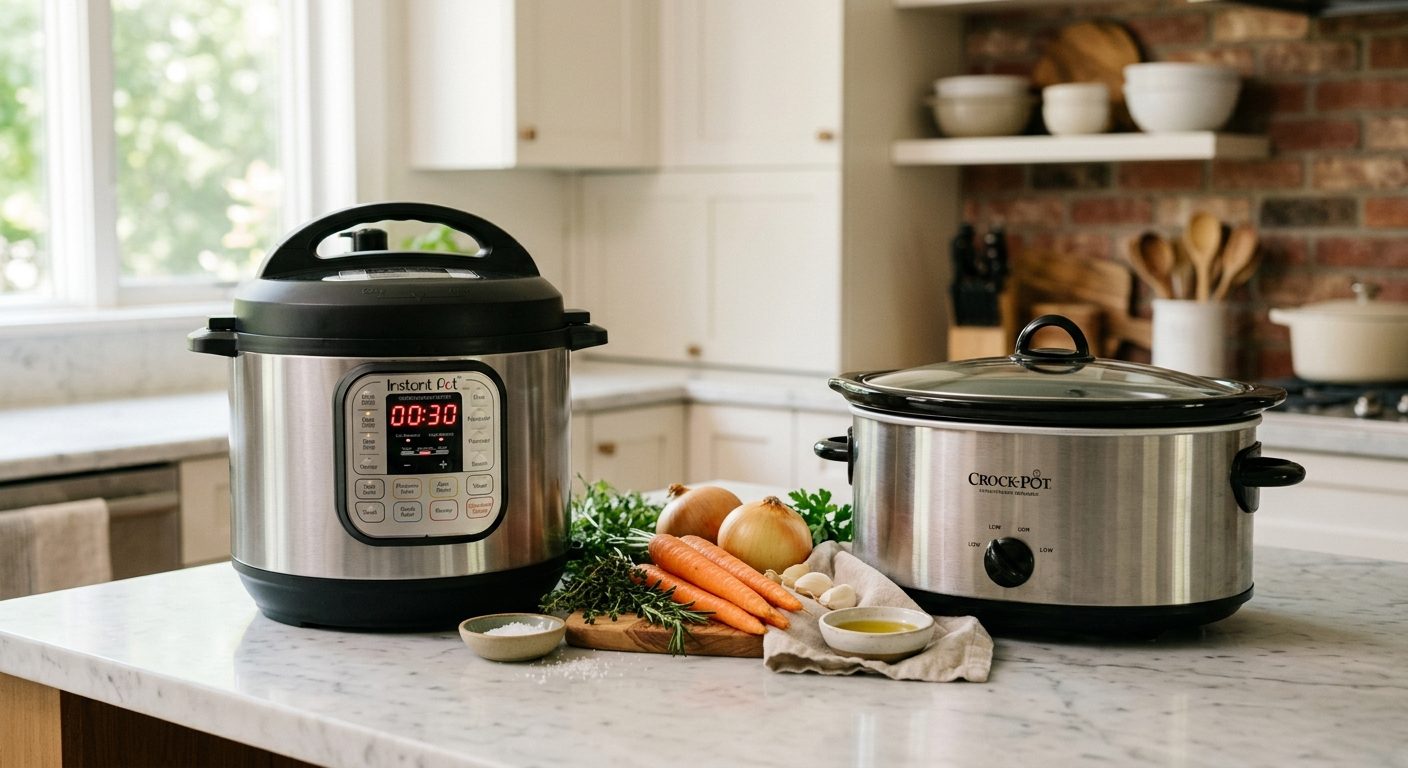
Instant Pot vs Slow Cooker: Which Actually Saves Time?
Quick Answer: Instant Pot cooks meals 70-90% faster (30 min vs 6-8 hours), saves electricity, and handles frozen meat safely. Slow cookers develop deeper flavors but require planning. For speed + versatility, choose Instant Pot; for classic braised flavor and true set-it-and-forget-it convenience, choose slow cooker.
Best for: Busy families, meal preppers, anyone choosing between pressure cooking and slow cooking methods.
Note on pricing: Instant Pot and Crock-Pot prices fluctuate by season and retailer. The ranges in this guide (Instant Pot typically $100-$150, Crock-Pot typically $50-$80) reflect March 2026 market rates but may vary. Always verify current price before purchase.
The Instant Pot versus slow cooker debate isn’t about which cooks better - it’s about when you remember to start dinner. Understanding portion sizing and weight is crucial for either appliance, which is why having reliable kitchen scales ensures consistent results when following recipes for both cooking methods. If you’re interested in other quick-cooking appliances, see our guide on best air fryers for frozen foods for another speed-cooking option.
Head-to-Head Comparison
| Factor | Instant Pot Duo Plus 6QT | Crock-Pot 7QT Programmable |
|---|---|---|
| Price | typically $100-$150 (check current price) | typically $50-$80 (check current price) |
| Pot Roast Time | 90 minutes total | 8 hours |
| Energy Use | 1.5 kWh (cycling) | 2.16 kWh (continuous) |
| Frozen Meat | Safe (fast heating) | Dangerous (bacteria zone) |
| Learning Curve | Moderate (pressure basics) | None (dump and wait) |
| Flavor Depth | Good (95% of slow cooker) | Superior (long breakdown) |
| Functions | 9-in-1 multi-cooker | Cook, warm only |
Cooking Time Reality
Pot Roast (3 lbs chuck):
- Instant Pot: 60 min pressure + 15 min build-up + 15 min release = 90 minutes total
- Slow Cooker: 8 hours on LOW
- Winner: Instant Pot (85% time savings)
Dried Black Beans (1 lb):
- Instant Pot: 25 minutes (no soaking required)
- Slow Cooker: 6-8 hours (pre-soaking required)
- Winner: Instant Pot (90% time savings)
Chicken Thighs (2 lbs):
- Instant Pot: 15 minutes pressure + build-up/release = 35 minutes total
- Slow Cooker: 4-6 hours
- Winner: Instant Pot (87% time savings)
Flavor Development:
- Instant Pot: Very good (pressure breaks down collagen quickly)
- Slow Cooker: Superior (long, gentle heat develops deeper flavors)
- Winner: Slow Cooker (noticeable difference in beef dishes)
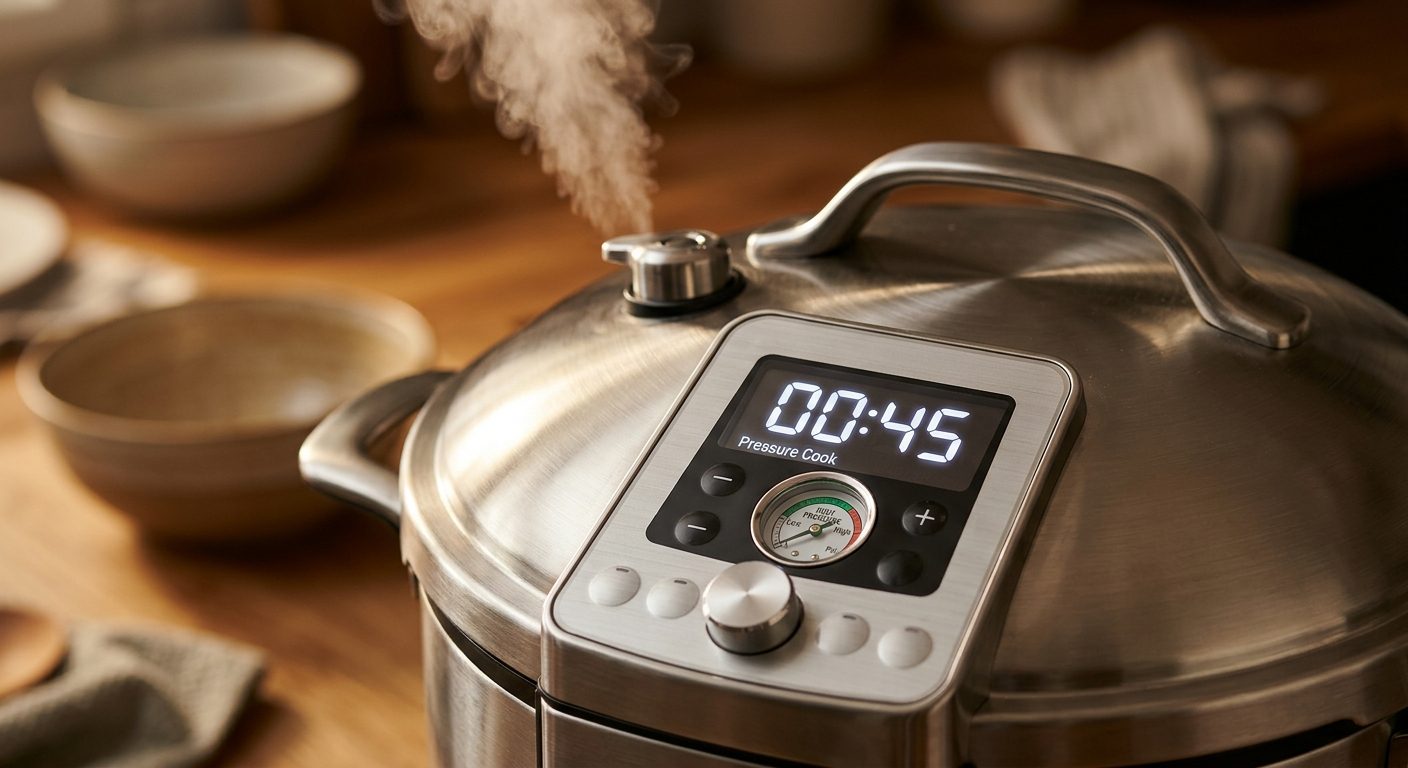
What Owners Actually Say
Instant Pot converts consistently mention the same revelation: “I can make dinner decisions at 5 PM instead of 9 AM.”
Slow cooker loyalists focus on flavor: “The Instant Pot pot roast is good. But after 8 hours in the Crock-Pot, the meat falls apart and the gravy is richer.”
Energy efficiency surprises most users: despite 1000W vs 270W ratings, the Instant Pot’s shorter cooking times use 30% less electricity.
Energy & Cost Analysis
8-Hour Pot Roast Energy Use:
- Crock-Pot 7QT: 270W × 8 hours = 2.16 kWh = $0.35 (at $0.16/kWh average)
- Instant Pot 6QT: 1000W × 1.5 hours actual = 1.5 kWh = $0.24
The Instant Pot saves $0.11 per cooking session despite higher wattage. Over a year of regular use, that’s $25-40 in energy savings. For a deeper dive into appliance electricity costs, see our air fryer energy cost guide. Also check our energy calculator for custom pricing based on your local rates.
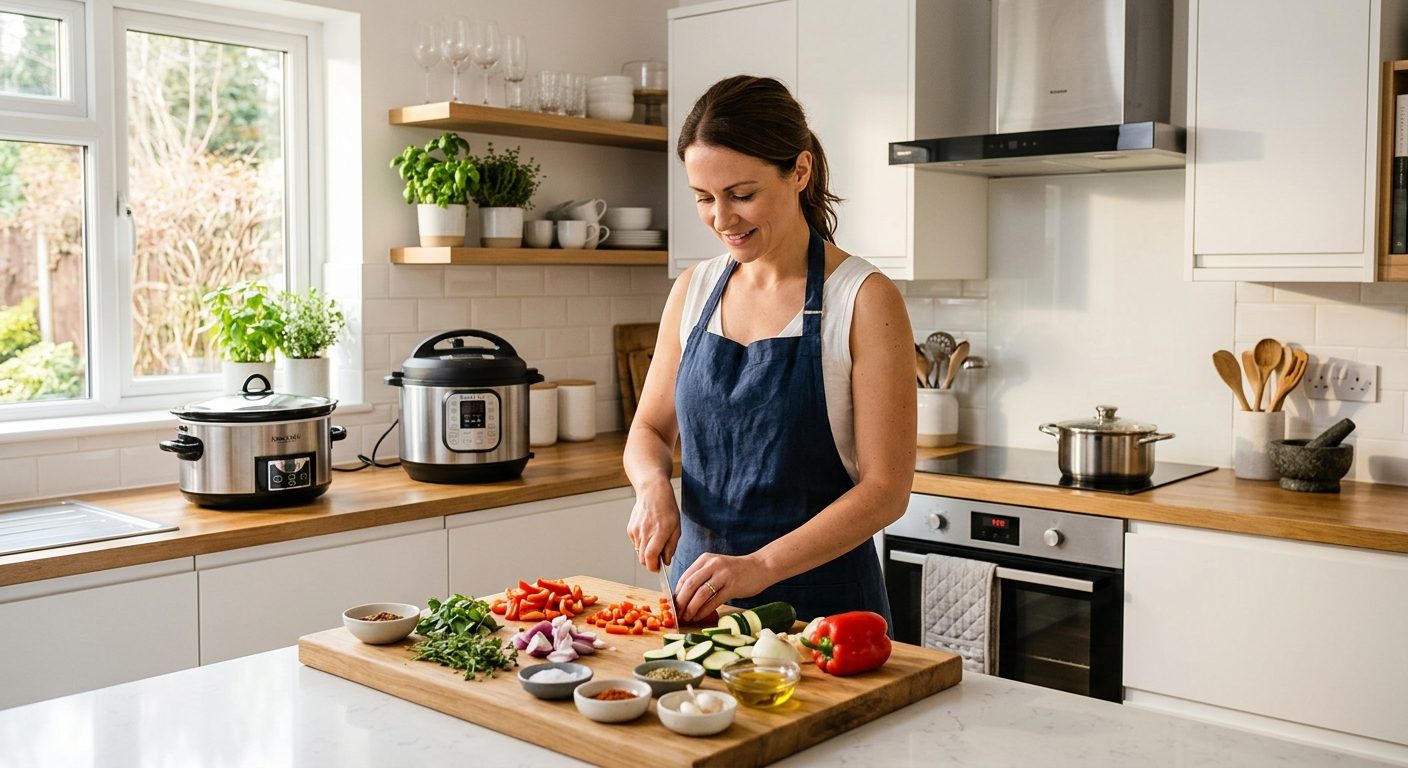
The Frozen Meat Problem
Slow Cooker: Frozen meat stays in the 40-140°F bacteria danger zone for hours during thawing. USDA explicitly recommends against this practice.
Instant Pot: Reaches 240°F+ quickly, making frozen-to-cooked safe. This changes meal planning completely - no more Sunday night “did I thaw something?” panic.
Who Each One Is Actually For
Choose Instant Pot if:
- You decide dinner at 5 PM, not 9 AM
- You frequently forget to thaw meat
- Counter space is limited (9 functions vs other dedicated appliances)
- You cook beans, grains, or tough proteins regularly
- Energy efficiency matters
- See how it compares to other quick-cooking methods in our air fryer vs convection oven guide
Choose Slow Cooker if:
- You love the “dump and disappear” approach
- Flavor development is more important than speed
- You primarily make soups, stews, and shredded meats
- You want the simplest possible operation
- Budget is tight (good models typically $50-$80; check current price)
- For other budget-friendly options, see our best budget air fryers and best toaster ovens guides
The Learning Curve Reality
Slow Cooker: Literally none. Dump ingredients, set to LOW, leave for 8 hours. If it’s not done, cook longer.
Instant Pot: Understanding pressure basics, minimum liquid requirements, and natural vs quick release. Takes 3-5 cooking sessions to feel comfortable.
Real Flaws Nobody Mentions
Instant Pot: The “slow cook” mode doesn’t work like a real slow cooker. Different heating patterns mean you can’t just convert recipes directly. Use pressure cooking instead. For alternatives, compare with our best blenders and specialty appliances.
Slow Cooker: Current Crock-Pot models run hot. Users report food boiling on LOW instead of gentle simmering, defeating the entire point. Check our best-food-processors for complementary prep tools.
Bottom Line
The Instant Pot wins on convenience, speed, and versatility for modern households that need dinner solutions, not just slow-cooked comfort food. Slow cookers excel at specific tasks - soups, stews, and dishes where long, gentle cooking develops superior flavors. Choose based on whether you plan meals or decide them last-minute.
FAQ
Can the Instant Pot’s slow cook mode replace a real slow cooker? No. Different heating patterns don’t develop flavors the same way. Use pressure cooking for speed or buy a dedicated slow cooker for authentic results.
Which one is actually safer? Instant Pot, due to multiple safety mechanisms and safe frozen meat handling. Slow cookers can create food safety risks with frozen ingredients.
What about cleanup differences? Nearly identical. Both have removable inner vessels. Instant Pot’s stainless steel cleans slightly easier than ceramic slow cooker inserts.
Can you leave the Instant Pot unattended like a slow cooker? Yes, once sealed and pressurized. Automatic keep-warm and pressure release work safely unattended.
Which is better for meal prep? Instant Pot wins for variety and speed. Cook different proteins throughout the week versus waiting all day for one slow cooker batch.
Related Guides
Explore more kitchen appliance comparisons: air fryer vs convection oven, best air fryers for families, best toaster ovens, and best blenders for complete meal preparation solutions.
Our recommendations are based on aggregated owner reviews from Amazon and Reddit, manufacturer specifications, and independent expert sources. We do not physically test products. Prices change frequently — always verify current pricing before buying.