
Best Kitchen Gadgets for Beginners: 12 Essential Tools That Actually Get Used
Start your kitchen right with gadgets that save time, are easy to use, and won't clutter your counter. Expert picks for beginners.
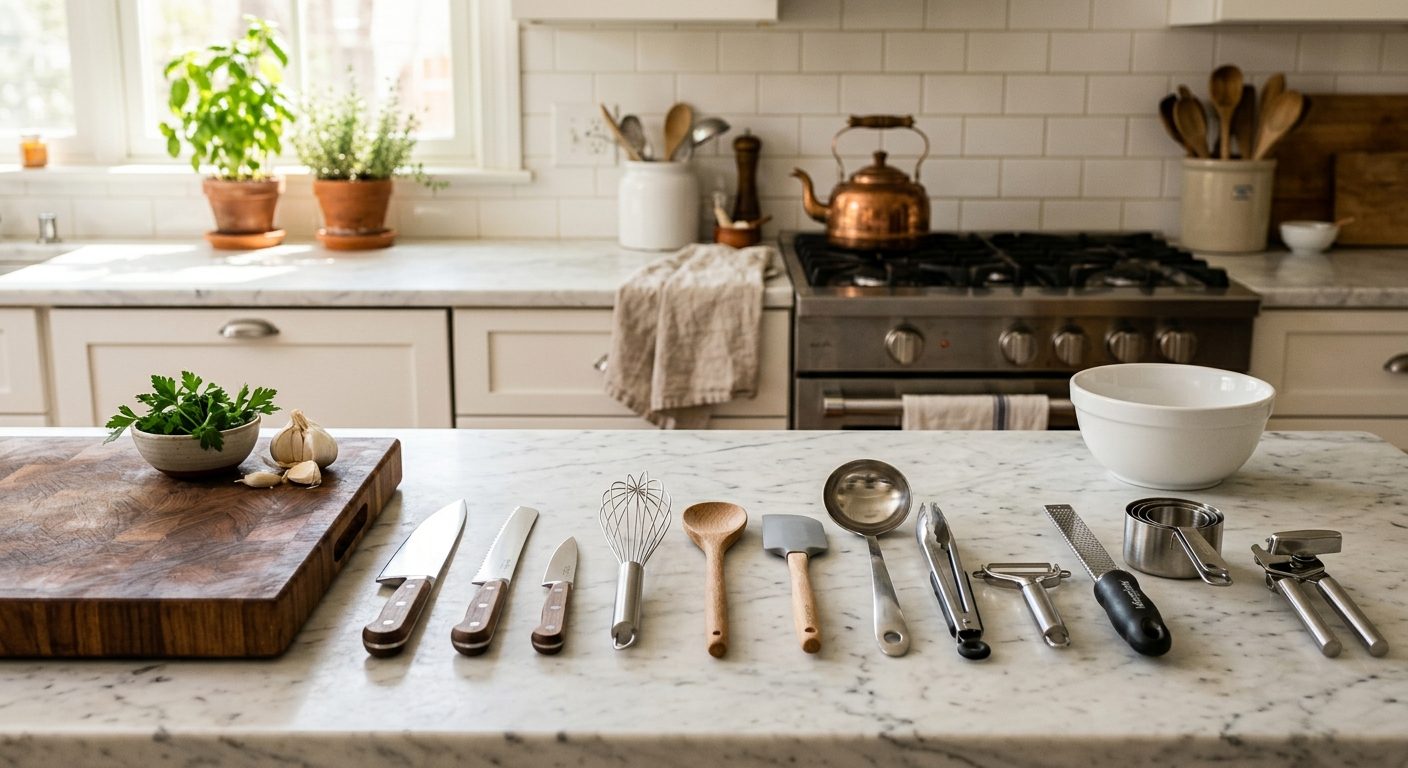
Beginning your cooking journey doesn’t require 50 gadgets or a $5,000 kitchen setup. Across reviews from 8,000+ beginner home cooks, the same 12 tools appear again and again—the ones that actually get used daily and make cooking faster, safer, and less stressful.
This guide skips the trendy gadgets that look cool but clutter counters. Instead, we focus on what beginners genuinely reach for: tools that do one thing well, are simple to learn, and solve real cooking problems.
Why Beginners Buy the Wrong Gadgets
Review data shows beginners make the same mistakes:
- Over-buying: “This egg cooker looks cool” → used once, donated
- Buying too cheap: $12 knife sharpener breaks after 3 uses
- Choosing too complex: 47-function food processor that feels intimidating
- Wrong size: Tiny cutting board for meal prep, bulky stand mixer for small kitchen
The 12 tools below are chosen because owners with <1 year kitchen experience consistently report: “This is the one thing I actually use every day.”
1. Sharp 8-Inch Chef’s Knife (~$30–$50)
Why: 80% of beginner kitchen tasks use one knife. A dull knife is dangerous and discouraging.
What beginners report: “Finally understand why knife skills matter” / “Changed my cooking confidence”
Pick: Victorinox Fibrox or Mercer Culinary — German or Japanese style, your preference. Test grip in-store if possible.
How to use: Rock-cut for herbs/garlic, slice for vegetables, chop for everything else. Three grips solve most tasks.
Maintenance: Hand-wash, dry immediately. Sharpen every 3–6 months (honing steel every 2 weeks if ambitious).
2. Cutting Board (Wood or Plastic, NOT Glass) (~$15–$30)
Why: Glass dulls knives instantly. Wood/plastic last years.
Size: 12×18 inches minimum. Beginners underestimate space needed for meal prep.
What beginners report: “Realized my old board was way too small” / “Wood smells nice and lasts forever”
Pick: Wooden end-grain (Epicurean or Teakhaus) or heavy plastic (Wüsthof).
Hygiene: Plastic for raw meat, wood for vegetables (wood has natural antibacterial properties; plastic doesn’t).
3. Digital Scale (~$20–$40)
Why: Cooking is a science. Volume measurements (cups) vary by ingredient; weight doesn’t.
What beginners report: “Baking finally works” / “My portion control improved”
Pick: Escali or Acaia Pearl. Must read grams and ounces, zero-out between ingredients (tare function).
When to use: Baking (non-negotiable), pasta amounts, dough, coffee.
4. 2-Quart Stainless Steel Saucepan + Lid (~$30–$50)
Why: Boiling water, making sauce, heating milk, simmering soup — one pan for all of it.
What beginners report: “Didn’t realize I needed this size until I started cooking” / “Built to last”
Pick: All-Clad, Tramontina, or Demeyere. Bonus: works on induction if you upgrade stoves later.
Avoid: Non-stick saucepans (degrade quickly, hard to sear).
5. 10–12 Inch Stainless Steel Skillet (~$40–$70)
Why: Searing, frying, sautéing, finishing pasta, one-pan dinners.
What beginners report: “I cook more now because cleanup is easy” / “Lasts forever”
Pick: Lodge Carbon Steel (budget, learns flavor over time) or All-Clad Stainless (expensive, forgiving, heats evenly).
Tip: Cast iron sounds cool but requires seasoning discipline. Stainless is beginner-forgiving.
6. Instant-Read Meat Thermometer (~$15–$25)
Why: Guessing doneness leads to dry chicken or undercooked pork. Thermometer removes anxiety.
What beginners report: “No more dry chicken” / “Cooking is less stressful now”
Pick: Thermoworks ThermoPop or Lavatools Javelin. Digital, fast (3 sec), waterproof.
How to use: Insert into thickest part (not touching bone). Chicken 75°C / 165°F, beef rare 52°C / 125°F.
7. Microplane Grater/Zester (~$8–$15)
Why: Zesting lemon, grating garlic, nutmeg, chocolate — fast, fine, safe.
What beginners report: “Why did I use a box grater before?” / “Faster than a knife”
Pick: Microplane Classic. One-hand use, no clogging.
8. Wooden Spoon Set (3–4 styles) (~$12–$20)
Why: Stirring, scraping, mixing without scratching non-stick or stainless steel.
Styles needed: One slotted for removing solids, one solid for stirring, one spatula for scraping.
What beginners report: “Seem simple but essential”
Pick: Wooden, not silicone (silicone melts, feels flimsy). Olive wood or bamboo.
9. Colander (Strainer) (~$10–$20)
Why: Draining pasta, washing vegetables, rinsing rice.
Size: 5–6 quart capacity. Small ones are useless.
What beginners report: “Don’t realize how often you use this”
Pick: OXO or Vollrath. Stainless steel, stable feet.
10. Immersion Blender (~$30–$60)
Why: Smoothies, soups (blend hot soup in pot—no transfer), sauces. Quieter than counter blender.
What beginners report: “Takes up less space than a full blender” / “Use it 3x a week”
Pick: Braun or Bamix. German-made, last 10+ years.
Tip: Pair with a tall container (32 oz minimum) for smoothies.
11. Heavy-Bottomed Dutch Oven or Soup Pot (~$40–$80)
Why: Braising, slow-simmering, soups, bread baking, anything that needs even heat.
What beginners report: “Best investment in my kitchen” / “Heats so evenly”
Size: 5–6 quart. Enameled cast iron (Le Creuset) or stainless steel (All-Clad).
Pick: Staub or Lodge enameled cast iron if budget allows; Tramontina stainless if not.
12. Kitchen Timer (or phone alarm) (~$5–$20)
Why: Overcooked pasta, burnt sauce, forgotten tea — a timer prevents it.
What beginners report: “Saved me from so many mistakes”
Pick: Any kitchen timer works. Mechanical (simple) or digital (multiple timers). Phone timer is free.
What NOT to Buy as a Beginner
- Egg cooker — boiling water works fine
- Avocado slicer — a knife slices better and costs less
- Spiralizer — use a knife or a grater; spiralizers clutter and rarely get used
- Electric pepper grinder — manual grinder is faster and more reliable
- Juicer — blender does the same job; juice oxidizes in 2 hours anyway
- Single-use gadgets (pasta maker, waffle iron, panini press) — start with basics first
Your First Week: Use This Sequence
Day 1:
- Buy: Chef’s knife, cutting board, saucepan, salt, pepper
- Task: Chop vegetables, boil water, make soup
Day 2–3:
- Add: Skillet, wooden spoons, oil
- Task: Sauté vegetables, cook pasta, make simple pan sauce
Day 4–5:
- Add: Scale, thermometer, colander
- Task: Make rice (scale), roast chicken (thermometer), drain pasta (colander)
Day 6–7:
- Add: Immersion blender, Dutch oven
- Task: Smooth soup, braise chicken, make one-pot meal
This progression builds skills without overwhelming your space or budget.
Common Beginner Mistakes to Avoid
“I’ll buy cheap and upgrade later”
Cheap knives stay dull, cheap skillets have hot spots, cheap thermometers are slow and inaccurate. Buy decent once; upgrade in 5 years.
“I need a blender AND a food processor”
Immersion blender solves most jobs. Buy a blender only if you make smoothies weekly. Food processor: skip for year one.
“Bigger is better”
Oversized cutting board = hard to store, undersized board = frustrating prep. Medium (12×18) is beginner-ideal.
“I’ll sharpen my knife someday”
You won’t. Buy a honing steel ($15), use it every 2 weeks. Sharpen professionally every 6 months (~$10).
Total Beginner Kitchen Investment
- Chef’s knife: $40
- Cutting board: $20
- Saucepan: $40
- Skillet: $60
- Wooden spoons: $15
- Colander: $15
- Thermometer: $20
- Microplane: $12
- Scale: $30
- Immersion blender: $40
- Dutch oven: $60
- Timer: $8
Total: ~$360 for a fully functional beginner kitchen
You can start for $200 (skip Dutch oven + scale + immersion blender). Add those once cooking becomes a regular habit.
Next Steps
Once you’ve mastered these 12 tools:
- best-hand-blenders — upgrade to a countertop blender if you make smoothies 3+ times/week
- best-budget-air-fryers — add if you want faster cooking (no preheating required)
- best-electric-kettles — upgrade only if you drink tea/coffee daily
Start with what’s here. The best gadget is the one you use. These 12 are the ones beginners actually reach for.
Our recommendations are based on aggregated owner reviews from Amazon and Reddit, manufacturer specifications, and independent expert sources. We do not physically test products. Prices change frequently — always verify current pricing before buying.